The Psychological Impact of Height on Individuals

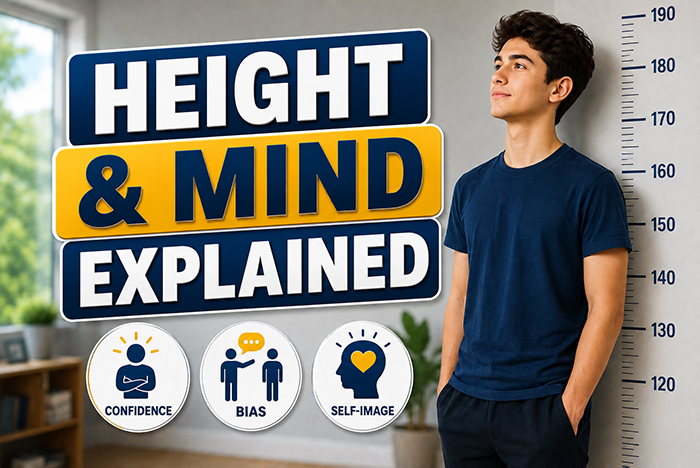
Height is one of the few physical traits people notice about each other in the first few seconds of meeting — and that visibility means it gets tangled up with all kinds of assumptions about confidence, leadership, and worth that have little to do with reality. This guide looks at what research actually shows about height and psychological wellbeing: where a real, documented social bias exists, where the picture is far more reassuring than people assume, and how families and individuals can build genuine confidence that doesn't depend on a number on a growth chart.
Key Takeaways
- There's a real, well-documented social bias around height — taller people are more likely to be perceived as competent leaders and, on average, earn somewhat more. This reflects how others perceive height, not a fact about anyone's actual worth or ability.
- Despite that bias, large population-based studies of children find little to no overall difference in social, emotional, or behavioral wellbeing between shorter kids and their average-height peers — the effects researchers do find are consistently small.
- Height dissatisfaction is a real and often overlooked part of body image research, and it doesn't only affect shorter people — some studies find taller women report their own distinct body image concerns.
- What shapes how a person feels about their height has much more to do with family attitudes, peer environment, and where their sense of self-worth comes from than the number itself.
- If height-related distress is persistent, affecting daily life, or tied to signs of an eating disorder or depression, that's worth bringing to a doctor or mental health professional — not something to try to manage alone.
Is There Really a Bias Around Height?
Taller people are genuinely perceived as more capable and better suited to leadership — a real, well-documented bias in how others see height. That's not the same as height reflecting anyone's actual ability or worth.
A widely cited workplace meta-analysis found taller individuals are rated higher on "social esteem," more likely to emerge as leaders, and earn somewhat more on average — even after accounting for sex, age, and weight.
This bias likely traces back to old associations between size and dominance. It says something about how people perceive height — not a fact about anyone's real competence, intelligence, or value.
It's worth naming this bias clearly — pretending it doesn't exist can feel dismissive to someone who's experienced it firsthand, like being underestimated in a meeting because of how tall they appear. But the research on individual psychological wellbeing tells a considerably more reassuring story.
The Individual PictureDoes Height Actually Affect Self-Esteem and Wellbeing?
This is where the research gets genuinely nuanced — two different studies, two different pictures, both worth holding at once:
National longitudinal data found height linked to modestly fewer depressive symptoms and higher self-esteem — clearest in boys aged 12–19. Researchers called it a small psychological benefit, not a defining one.
A study of 700+ sixth-graders from the general population — not a height clinic — found no significant difference in social, emotional, or behavioral wellbeing between shorter and average-height kids.
Height carries real social meaning and a documented bias in how others perceive it — but for most individual kids and teens, height alone is not a strong predictor of how they'll actually feel about themselves or fare socially. Much of the more alarming-sounding research comes from clinic-referred samples, a very different, more self-selected group than kids in general.
What Really Determines How Someone Feels About Their Height
Height Dissatisfaction Isn't Only About Being Short
A common assumption is that height concerns only run one direction — shorter people wanting to be taller. A recent research review of height dissatisfaction as a body image topic pushes back on that assumption, noting that some taller women report their own distinct concerns, including a heightened focus on muscularity and how their size is perceived in social and romantic contexts. The review also highlights that height is unlike most other body image concerns in one key way: unlike weight or muscle tone, it generally can't be meaningfully changed through diet, exercise, or lifestyle — which is part of why unresolved height dissatisfaction can feel particularly stuck for the people who experience it.
▶ Watch: Coping with Body Image Struggles? 5 Therapist-Approved Ways to Improve Self-Esteem
Watch on YouTube ↗ The NumbersRead together, these numbers describe a real social bias sitting alongside a much more forgiving reality for most individuals — which is worth remembering on the harder days.
Building Self-Worth That Doesn't Depend on Height
For parents, the most useful thing you can offer isn't reassurance that height doesn't matter at all — kids can tell when that's not fully true — but a steady, ongoing message that a person's worth was never actually riding on it. Keep the conversation open rather than avoiding the topic, notice and name effort and character rather than only appearance, and pay attention to how height is discussed at home, since kids absorb that tone quickly. If a child or teen shows signs of persistent low mood, withdrawal, or a preoccupation with height or appearance that's affecting daily life, sleep, or eating, that's a good reason to loop in a pediatrician or mental health professional — not because normal height-related feelings are a red flag on their own, but because ongoing distress deserves real support, not just a pep talk.
Continue Reading
❓ Frequently Asked Questions
Does being short actually affect self-esteem?
Research shows a small, inconsistent link at best. Some longitudinal studies find modestly lower self-esteem associated with shorter height, most clearly in adolescent boys, while large population-based studies of children find no significant overall difference in wellbeing between shorter and average-height kids. Individual experience varies far more than height alone predicts.
Is there real bias against shorter people?
Yes, in how people are perceived socially. A major workplace meta-analysis found height correlates with perceived leadership and "social esteem," and with somewhat higher income on average. This reflects a documented perception bias in others, not an actual difference in ability or worth.
Do taller people ever struggle with height-related body image?
Yes. Body image research on height dissatisfaction has found that some taller women report their own concerns, including increased focus on muscularity and how their size is perceived socially. Height dissatisfaction isn't a one-directional issue limited to shorter individuals.
How can parents support a child who's self-conscious about their height?
Keep the topic open rather than avoided, and consistently reinforce that a child's worth isn't tied to a number on a growth chart. Notice and name character, effort, and skills rather than only appearance, and watch how height is discussed at home, since kids pick up on that tone quickly.
When should height-related distress be taken to a professional?
If concerns about height are persistent, affecting sleep, eating, mood, or daily functioning, or seem connected to broader signs of anxiety or depression, it's worth involving a pediatrician or mental health professional. That's about getting real support for ongoing distress, not treating normal height-related feelings as a problem on their own.
📚 References
- Judge TA, Cable DM. The Effect of Physical Height on Workplace Success and Income: Preliminary Test of a Theoretical Model. Journal of Applied Psychology. 2004;89(3):428–441. pubmed.ncbi.nlm.nih.gov/15161403
- Rees DI, Sabia JJ, Argys LM. A Head Above the Rest: Height and Adolescent Psychological Well-Being. Economics & Human Biology. 2009;7(2):217–228. pubmed.ncbi.nlm.nih.gov/19447690
- Lee JM, Appugliese D, Coleman SM, Kaciroti N, Corwyn RF, Bradley RH, Sandberg DE, Lumeng JC. Short Stature in a Population-Based Cohort: Social, Emotional, and Behavioral Functioning. Pediatrics. 2009;124(3):903–910. pubmed.ncbi.nlm.nih.gov/19706592
- Schmidt NP, Talbot D. Standing Tall or Falling Short: A Narrative Review of Height Dissatisfaction and Psychological Outcomes. PLOS Mental Health. 2025;2(11):e0000497. pubmed.ncbi.nlm.nih.gov/41662098