The Importance of Calcium for Bone Growth

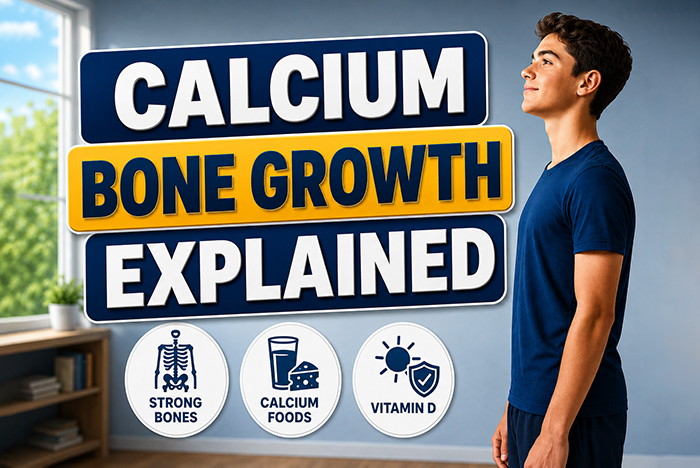
Calcium is one of the most talked-about nutrients when it comes to kids' growth — it's on every milk carton, every pediatrician's checklist, every "foods for strong bones" list. But how much of that is backed by real evidence, and how much is just repeated because it sounds right? This guide looks at what the research actually shows about calcium and bone growth: how strong the evidence really is, what else matters just as much, and how to build genuinely good calcium habits without overcomplicating things.
Key Takeaways
- Calcium is a genuinely important building block for bone, and childhood and adolescence — when roughly 90% of adult bone mass is laid down — are the years it matters most.
- The evidence for calcium supplementation specifically is more nuanced than marketing suggests: a major Cochrane review found no significant effect on bone density at the hip or spine in generally healthy children, though some individual trials and diet-based studies do show benefits, especially in kids with low baseline intake.
- Calcium doesn't work alone — vitamin D (for absorption), protein, and weight-bearing physical activity all meaningfully contribute to bone strength alongside it.
- Most children and teens don't meet daily calcium recommendations, which matters more for lifelong bone health (avoiding osteoporosis later) than for any single growth spurt.
- Food sources are generally preferred over supplements for meeting calcium needs; if intake is a persistent concern, that's a conversation for a pediatrician or registered dietitian rather than a reason to self-supplement.
Does Calcium Intake Actually Build Bone?
Calcium is a genuine, necessary building block for bone tissue — that part isn't in question. What's more nuanced is how much difference extra calcium (beyond what a normal diet provides) actually makes, and for whom. The honest picture is "meaningfully helpful for some, not a guaranteed boost for everyone."
Individual randomized trials in adolescent girls have found calcium supplementation increased bone mineral density gains compared with placebo, particularly in kids starting from a lower baseline calcium intake.
A Cochrane systematic review pooling 19 trials and nearly 2,900 healthy children found no significant effect of calcium supplementation on bone density at the hip or spine overall — a reminder that population-level effects are often smaller than any single positive trial suggests.
Both of these findings are true at once, and that's not a contradiction — it's what happens when you have real, mixed evidence instead of a marketing slogan. Calcium clearly matters for bone health. It's just not a dial you can turn up indefinitely for bigger returns, and its effect depends heavily on how much someone was already getting from their regular diet.
Building BlocksWhat Actually Builds Strong, Healthy Bones
It's Not Just About Milk
Dairy gets most of the attention, but plenty of non-dairy foods contribute meaningfully to calcium intake — fortified plant milks, leafy greens like kale and bok choy, almonds, and calcium-set tofu among them. For families avoiding dairy by choice or necessity, meeting calcium needs is very achievable with some intention around meal planning, and doesn't require dairy specifically. See our guide to height-boosting foods for vegetarians for a fuller list of options.
▶ Watch: Children: Calcium Crisis and Bone Health
Watch on YouTube ↗ The NumbersRead together: calcium intake reliably supports bone health, especially for kids not already getting enough — but it's a supporting player in a much bigger cast that includes genetics, vitamin D, protein, and physical activity.
Building Better Calcium Habits
For most kids and teens, the practical goal is simple: work calcium-rich foods into daily meals consistently, pair them with enough vitamin D, and keep up regular physical activity. Our Calcium Intake Calculator for Kids & Teens is a quick way to check whether a typical day's food choices are getting close to the recommended range for a specific age group.
More isn't automatically better. Calcium has a tolerable upper intake level, and consistently exceeding it — especially through supplements rather than food — has been linked to risks like kidney stones and interference with the absorption of other minerals. If you're concerned a child isn't getting enough calcium, or are considering a supplement, that's worth discussing with a pediatrician or registered dietitian rather than deciding on dosage alone.
Continue Reading
❓ Frequently Asked Questions
Does more calcium mean taller kids?
Not directly. Calcium supports bone density and strength rather than driving height on its own. Height is primarily determined by genetics, with adequate nutrition (calcium included) supporting a child in reaching their own genetic potential rather than exceeding it.
How much calcium do kids and teens actually need?
NIH guidance recommends 1,300 mg/day for ages 9 to 18, and 1,000 mg/day for younger children — roughly three to four servings of calcium-rich food a day, depending on age.
Do calcium supplements work better than food sources?
Not necessarily. Research generally doesn't show supplements outperforming dietary calcium for bone health, and food sources come with other nutrients that support absorption and bone health together. Food is usually the preferred first approach.
What if my child doesn't drink milk?
Milk isn't the only option — fortified plant milks, leafy greens, almonds, calcium-set tofu, and other foods can meaningfully contribute to calcium intake. It just takes a bit more intentional meal planning.
Is it possible to get too much calcium?
Yes. Calcium has a tolerable upper intake level, and consistently exceeding it, particularly through supplements, has been linked to risks like kidney stones. If you're considering a supplement for your child, it's worth checking with a pediatrician first.
📚 References
- Winzenberg TM, Shaw K, Fryer J, Jones G. Calcium Supplementation for Improving Bone Mineral Density in Children. Cochrane Database of Systematic Reviews. 2006;(2):CD005119. pubmed.ncbi.nlm.nih.gov/16625624
- Lloyd T, Andon MB, Rollings N, Martel JK, Landis JR, Demers LM, et al. Calcium Supplementation and Bone Mineral Density in Adolescent Girls. JAMA. 1993;270(7):841–844. pubmed.ncbi.nlm.nih.gov/8340983
- Hidayat K, Zhang L-L, Rizzoli R, Guo Y-X, Zhou Y, Shi Y-J, Su H-W, Liu B, Qin L-Q. The Effects of Dairy Product Supplementation on Bone Health Indices in Children Aged 3 to 18 Years: A Meta-Analysis of Randomized Controlled Trials. Advances in Nutrition. 2023. pmc.ncbi.nlm.nih.gov/articles/PMC10509403
- NIH Office of Dietary Supplements. Calcium — Fact Sheet for Health Professionals. ods.od.nih.gov/factsheets/Calcium-HealthProfessional