Does Walking Make You Taller?

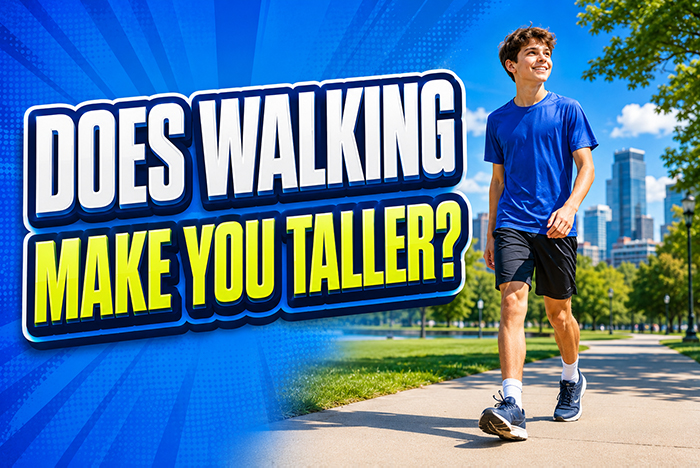
Walking is one of the simplest, most accessible forms of exercise — so it's no surprise people wonder whether a daily walking habit could help them grow taller. Here's what walking actually does for your body, and where the "taller" claim holds up and where it doesn't.
Does Walking Make You Taller?
Walking doesn't lengthen your bones or increase your skeletal height — no exercise does, once growth plates have closed. What walking can do is help you stand and move in a way that lets you show off the height you already have, mainly through better posture and healthier joints and bones over time.
What Walking Actually Does for Your Body
Walking is a weight-bearing exercise — meaning your bones and muscles support your body weight against gravity as you move. That matters for bone health at any age:
- Supports bone density: weight-bearing activity, walking included, helps maintain and build bone mineral density.
- Improves circulation: better blood flow supports nutrient delivery to joints and spinal discs.
- Builds core and postural strength: regular walking engages the muscles that help keep your spine aligned.
- Supports joint health: as a low-impact activity, it's easy on joints while still keeping them mobile.
That said, walking is on the gentler end of weight-bearing exercise. Compared with higher-impact activities, it applies less mechanical stress to bone — which matters if the goal is maximizing bone-building stimulus specifically.
Walking vs. Other Exercises for Growth
Not all weight-bearing activities affect bone the same way. Here's roughly how walking compares with other common options:
| Activity | Impact Level | Bone-Building Stimulus |
|---|---|---|
| Walking | Low | Modest |
| Brisk walking / hiking | Low–moderate | Moderate |
| Jogging / running | Moderate–high | Higher |
| Jumping, skipping, sports | High | Highest |
| Swimming, cycling | None (non-weight-bearing) | Minimal for bone |
Higher-impact activities generally provide a stronger bone-building stimulus, which is why they're often emphasized for growing kids and teens — but walking is still a valuable, low-barrier foundation, especially for people who can't tolerate higher-impact exercise.
For a deeper look at which exercises are most associated with supporting height growth in teens, see our guide to the best height growth exercises for teenagers.
▶ Watch: Does Walking Improve Bone Density? — Will Harlow, Physiotherapist
Watch on YouTube ↗The Posture Connection
A lot of the "walking makes you taller" effect people notice is really a posture effect. Regular walking with good form — shoulders back, head level, core gently engaged — strengthens the muscles that keep your spine upright. Since slouching can make someone look shorter than they actually are, better posture from consistent walking can make a real, visible difference in how tall you appear, even though it isn't changing your actual skeletal height.
Walking for Growing Kids and Teens
For children and teens who are still growing, regular physical activity — walking included — supports the overall health that underlies healthy growth: it helps maintain a healthy weight, supports cardiovascular health, and contributes to bone mineralization alongside good nutrition. Walking is a fine part of an active routine, but pairing it with higher-impact activities (running, jumping, sports) gives growing bones a stronger stimulus, per general pediatric exercise guidance.
As with adults, walking alone in kids won't override genetics or "add" height beyond what their growth plates and hormones already have planned — but as one piece of a well-rounded, active lifestyle, it's a healthy habit worth keeping.
Walking is genuinely good for you — supporting bone density, circulation, and posture — but it isn't a height-growth hack. Any "taller" effect people notice from walking more is almost always about standing straighter, not actually growing. If height growth (for a child or teen) or bone health (at any age) is the real goal, walking works best as part of a broader routine that includes some higher-impact movement, good nutrition, and enough sleep.
FAQs
Does walking make you taller?
Can walking help a growing teenager get taller?
Why do I feel taller after a walk?
Is walking as good as running for bone health?
References
- NIH National Institute of Arthritis and Musculoskeletal and Skin Diseases (NIAMS). Exercise for Your Bone Health. — niams.nih.gov
- Han EY, Choi JH, Kim SH, Im SH. The Effect of Weight Bearing on Bone Mineral Density and Bone Growth in Children with Cerebral Palsy: A Randomized Controlled Preliminary Trial. Medicine (Baltimore). 2017;96(10):e5896. — pmc.ncbi.nlm.nih.gov/articles/PMC5348145
- International Osteoporosis Foundation. Exercise Recommendations for Bone Health. — osteoporosis.foundation