
NuBest Omega-3 Gummies
Why Omega-3 Comes Up So Often in Kids' Nutrition
When people talk about omega-3 and kids, they're almost always really talking about one specific fatty acid: DHA (docosahexaenoic acid). DHA is a major structural fat in the brain and retina, and research on children's cognition and behavior has focused heavily on DHA status specifically — not omega-3 fatty acids as a broad category.
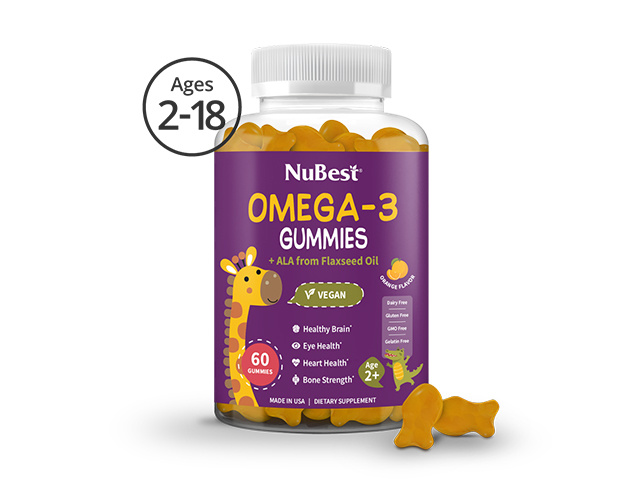
That distinction matters here, because NuBest Omega-3 Gummies don't contain DHA directly. They're built around ALA (alpha-linolenic acid), a plant-based omega-3 found in flaxseed oil. The body can convert some ALA into DHA — but, as covered below, that conversion is limited. Understanding this upfront changes what's reasonable to expect from the product.
What's Actually Inside
| Category | Details |
|---|---|
| Active ingredients | Omega Fatty Acids from flaxseed oil (145 mg), of which Omega-3 ALA (90 mg), Sodium |
| Other ingredients | Water, Sugar, Glucose Syrup (Corn Syrup), Flaxseed Oil, Citrus Pectin, Natural Orange Flavor, Beta Carotene, Citric Acid, Sodium Citrate |
| Diet compatibility | Vegan, gluten-free, gelatin-free, dairy-free, non-GMO |
| Made in | USA, in an FDA-registered, GMP-certified facility |
| Age restriction | Not recommended under age 2, due to choking risk |
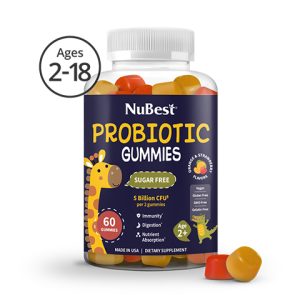
Good to know. This one isn't sugar-free — the ingredient panel lists Sugar and Glucose Syrup (Corn Syrup) alongside the flaxseed oil. If sugar-free matters for your routine, NuBest's Probiotic and Immune Gummies are the sugar-free picks in their lineup.
Key Benefits at a Glance
The Science: What ALA Can (and Can't) Do
This is the part most product pages skip, so it's worth spelling out clearly. ALA is a real, essential nutrient — but the body converts it into the long-chain omega-3s that get the most attention (EPA and DHA) quite inefficiently. Published research places whole-body conversion of ALA to EPA at under 8%, and conversion all the way to DHA at under 4% in most adults. Conversion rates also vary by sex: research suggests premenopausal women convert ALA to DHA somewhat more efficiently than men do, likely related to estrogen's effect on the relevant enzymes — a difference that hasn't been well studied specifically in children.
Meanwhile, the research base connecting omega-3 intake to children's learning and behavior is built almost entirely around direct DHA status or DHA supplementation — not ALA. A comprehensive review of DHA and cognitive/behavioral outcomes in healthy school-age children found inconsistent results across individual cognitive tests, but a favorable signal in more than half of the studies reviewed, particularly for measures of brain activity and school performance.
What this means in practice: An ALA-only gummy is a reasonable way to help a child meet general essential-fatty-acid intake, especially one who won't take fish oil. But it is not equivalent to a DHA-specific supplement (fish oil or algae oil), and shouldn't be expected to deliver the same brain- or eye-health effects that DHA-focused research has actually studied. If DHA specifically is the goal — rather than omega-3s broadly — an algae-oil DHA supplement is the more direct, vegan-compatible route.
How to Use It
Ages 2–10
Chew one (1) gummy daily, with or without food.
Ages 10+
Chew one to two (1–2) gummies daily, or as recommended by a healthcare professional.
Under age 2
Not recommended — gummy supplements carry a meaningful choking risk for toddlers under 2, regardless of brand.
Supervise chewing
Gummies should be fully chewed before swallowing, under adult supervision, at any age.
Who Should Check With a Doctor First
Frequently Asked Questions
Is this the same as fish oil?
No. It supplies ALA, a plant-based omega-3 from flaxseed oil, rather than the DHA and EPA found directly in fish oil. The body converts some ALA into DHA and EPA, but only in small amounts.
Does it contain added sugar?
Yes — Sugar and Glucose Syrup (Corn Syrup) are both listed on the ingredient panel. Worth checking your bottle's label to confirm the current formulation.
Why choose ALA over a DHA algae-oil supplement?
Mainly taste, texture, and simplicity — ALA-based gummies tend to have a milder flavor profile than fish or algae oil. If DHA itself is the priority, an algae-oil DHA gummy is a more direct plant-based option worth comparing.
Can this be taken with other NuBest supplements?
Generally yes, as part of a broader daily routine, but any combination of supplements is worth reviewing with a pediatrician, particularly to keep total nutrient and sugar intake in view across products.


There are no reviews yet.